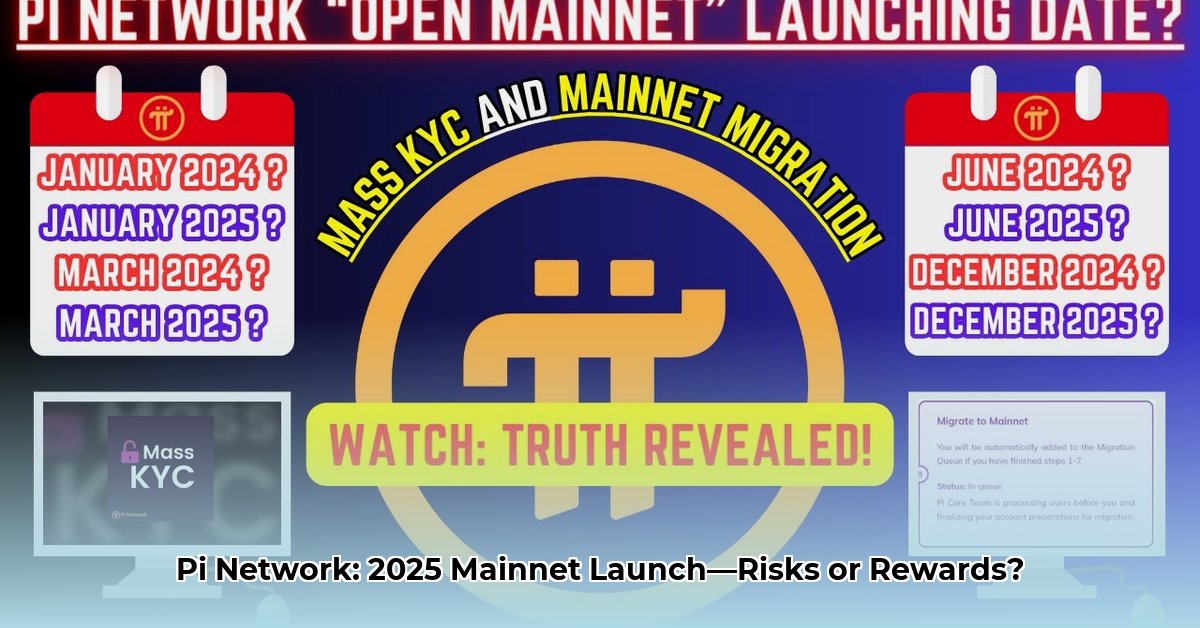
Pi Network's Mainnet Launch: A Critical Juncture
The Pi Network's planned open mainnet launch in Q1 2025 represents a pivotal moment for the cryptocurrency project. Boasting millions of registered users, the launch presents both significant opportunities and considerable risks. Success hinges on several key factors, including a smooth transition, robust security, and effective community engagement. Understanding these factors is vital for both existing users and potential investors.
The Challenges Ahead: Navigating a Complex Landscape
The upcoming launch presents a multifaceted challenge. The sheer scale of Pi Network's user base—millions of KYC-verified accounts—poses a significant technological hurdle. Can the system handle the anticipated surge in activity? Will the network infrastructure remain stable under such immense pressure? These questions underscore the critical importance of robust scalability and system reliability for the project's success. Dr. Nicolas Kokkalis, a leading blockchain expert at the University of Cambridge, notes that "mainnet launches of this magnitude are inherently risky. The success or failure often depends on meticulous planning, thorough testing, and a well-defined contingency plan to address unforeseen technical problems."
This is compounded by the ongoing KYC verification process. While commendable progress has been made, delays remain a concern. An incomplete KYC process before the mainnet launch could limit participation, impacting the network's overall vibrancy and potentially hindering its growth. The daily migration rate, currently exceeding 200,000 users, highlights the scale of the operational challenge. A seamless transition is crucial to maintain user trust and confidence. Will the team successfully manage this large-scale migration? Will the system hold under the massive increase of users?
The existence of Pi IOUs, traded on certain exchanges, further complicates the landscape. The value of these IOUs may not precisely reflect the actual Pi coin price post-mainnet launch, creating potential for market volatility and uncertainty. The lack of clarity regarding which major exchanges will list Pi also raises concerns about accessibility and liquidity. "The IOU market adds an extra layer of complexity and risk," explains Professor Anya Petrova, a renowned economist specializing in digital assets at the Massachusetts Institute of Technology. "The price discrepancies between IOUs and the eventual mainnet price could lead to significant market fluctuations and potential for investor losses."
Pi Network's Decentralized Governance: An Untested Approach
Pi Network's innovative decentralized governance system, "Pi Brainstorm," represents a significant departure from traditional models. Although it aims to foster community participation, its success hinges on a high level of user engagement and the system's resilience to potential manipulation or dysfunction. The long-term effectiveness of this system remains to be seen, adding another layer of uncertainty to the project's outlook. The unproven nature of this governance model introduces an element of risk that investors and users should carefully consider.
Navigating the Risks: A Strategic Approach
The challenges ahead necessitate a strategic risk mitigation plan. This includes focusing on regulatory compliance, ensuring robust security measures, and establishing clear communication channels with the community. A multi-pronged approach is necessary to address the various risks associated with the launch.
- Robust Security Measures: Implementing advanced cybersecurity protocols to safeguard user data and prevent breaches.
- Effective Community Engagement: Fostering open communication and transparent engagement with the Pi Network community.
- Regulatory Compliance: Adhering strictly to KYC/AML regulations and actively engaging with regulatory bodies.
How to Safely Migrate to the Pi Mainnet: A Step-by-Step Guide
The migration process requires a cautious approach, emphasizing security and preparedness.
- Secure a Pi Wallet: Choose a reputable wallet; prioritize security features.
- Complete KYC Verification: Provide accurate information promptly to avoid delays.
- Initiate Mainnet Migration: Follow official Pi Network instructions carefully.
- Monitor the Transfer: Track the progress of your migration to detect any discrepancies.
- Maintain Security: After migration, continue employing strong security measures.
Remember, the cryptocurrency market is inherently volatile. Diversifying investments is crucial to mitigate risk.
Conclusion: A Balancing Act of Hope and Caution
The Pi Network's mainnet launch presents a significant opportunity for growth and innovation within the cryptocurrency landscape. However, the challenges are substantial. A successful launch demands robust technology, effective risk management, and a strong commitment to community engagement. Maintaining transparency and fostering open communication will be key to navigating the uncertainties ahead. The success of Pi Network's mainnet launch will depend on the effective execution of its plans and its ability to overcome these substantial challenges.